
A federal appeals court has upheld the seven-year prison sentence imposed on Antonio Casillas Montero, the Puerto Rico kennel operator who admitted running an international dogfighting enterprise for 35 years.
Casillas owned Stone City Kennels in Humacao. According to facts he stipulated and a later appellate ruling, he bred and trained pit-bull-type dogs, sold them for thousands of dollars, mentored other dogfighters and participated in more than 150 fights across the Americas and Caribbean.
The case is not new: he was sentenced on September 22, 2023. But its current status matters. In September 2025, the U.S. Court of Appeals for the First Circuit rejected his challenges and affirmed the full 84-month sentence.

A network built around more than 150 fights
Federal prosecutors said Stone City Kennels supplied dogs for fights in Puerto Rico, the continental United States, Mexico, Ecuador, Peru and the Dominican Republic. Casillas also promoted events and taught others how to condition dogs, including through steroid use.
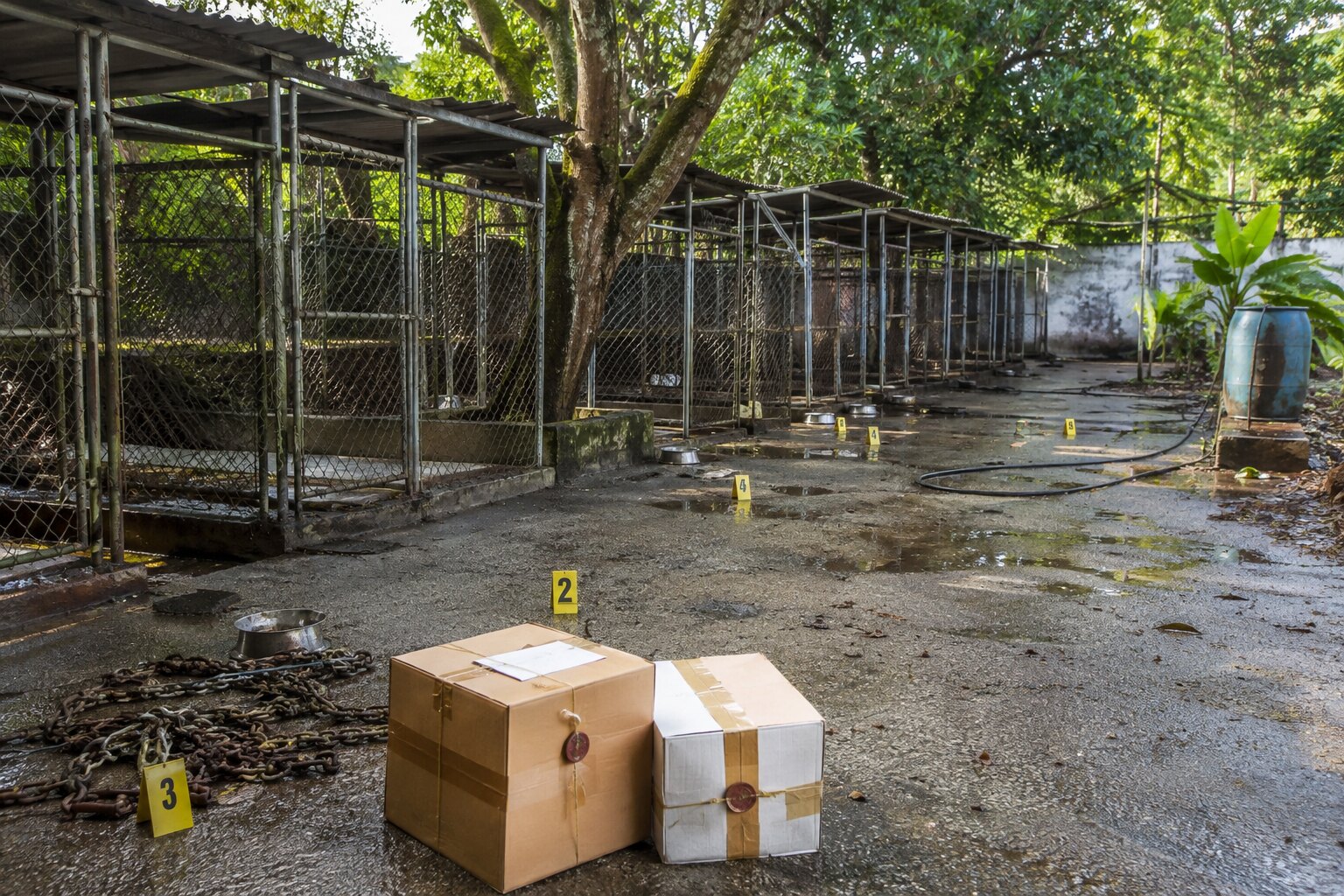
During a federal search of his Humacao property, officers seized several dogs suffering from conditions including skin infections, lameness and jaw problems. The First Circuit’s 2025 opinion states that four dogs in poor condition were found during the search.
The government’s sentencing evidence described fights lasting more than 90 minutes. Prosecutors said Casillas allowed losing dogs to die from their injuries instead of removing them and showed a video at sentencing of one dog dying after a match in the Dominican Republic.
These were not merely accusations left unresolved. Casillas pleaded guilty in May 2023 to one count of conspiracy to violate the Animal Welfare Act and two counts of possessing dogs for use in an animal-fighting venture.
Why the seven-year sentence stood out
The federal sentencing-guideline range calculated in the case was 12 to 18 months. U.S. District Judge Silvia L. Carreño-Coll instead imposed consecutive terms totaling 84 months: 36 months for the conspiracy count and 24 months for each of the two possession counts.
The longer sentence reflected the duration, international reach and severity of the conduct, as well as the court’s stated concern about deterrence. Prosecutors told the court they had not found a comparable case involving so many fights over so many years.
Casillas appealed, arguing in part that the court had not adequately explained the sentence, that consecutive punishment violated constitutional protections against double jeopardy and that 84 months was unreasonably high compared with sentences in other cases.
The First Circuit rejected those arguments. It held that federal law permits separate punishment for each dog possessed for fighting and concluded that the district judge had adequately justified the upward variance.
The dogs were treated as inventory for violence
Organized dogfighting depends on turning living animals into commodities. Dogs are bred, conditioned, transported and matched according to their perceived ability to injure another animal. Those who cannot perform may be abandoned, killed or left without care.
The Stone City case illustrates how that system can cross borders and persist for decades. It also shows why investigators target not only individual fights but the breeding, sales, transport and mentoring networks that allow the activity to continue.
A seven-year sentence cannot undo the suffering inflicted through more than 150 fights. But the judgment—and the appellate decision preserving it—establishes that prolonged, profit-driven animal fighting can bring consequences far beyond the ordinary guideline range.
Sources
- U.S. Attorney’s Office, District of Puerto Rico: Sentencing announcement
- U.S. Court of Appeals for the First Circuit: United States v. Casillas-Montero
- Associated Press: Puerto Rico dogfighting sentence
