
A dried starfish, piece of coral or polished shell may look like an innocent reminder of a beach holiday. But wildlife authorities and conservation organizations warn that a product displayed openly for sale is not automatically legal to export, legal to bring home or responsibly sourced.
Marine-life souvenirs occupy a complicated space. Some are lawfully collected and traded. Others come from protected species, require permits or may not be imported into a traveler’s home country at all. Buyers may also have little reliable information about whether an animal was found after dying naturally or collected alive for the souvenir trade.
That uncertainty is why a simple question—“Is it legal?”—does not always provide a complete ethical answer. Legality depends on the species, the place of collection, the country of sale, the destination country and sometimes the paperwork accompanying the item.
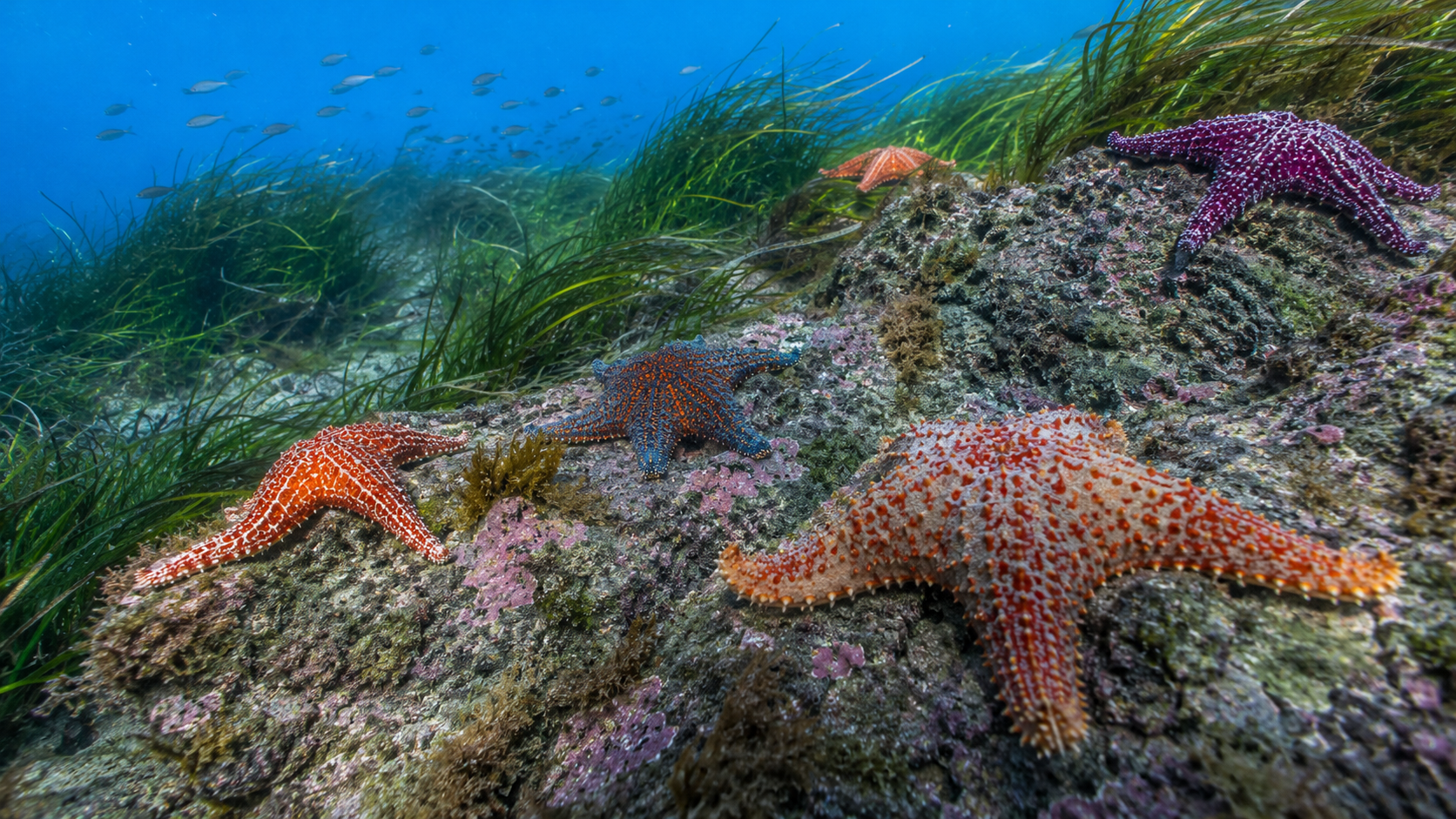
For sale does not always mean safe to bring home
The U.S. Fish and Wildlife Service has long urged travelers to use caution when buying wildlife products abroad. Its “Buyer Beware” guidance for Caribbean travelers explains that souvenirs made from animals and plants may be controlled by local law, U.S. law or the Convention on International Trade in Endangered Species of Wild Fauna and Flora, commonly known as CITES.
CITES does not prohibit all wildlife trade. It uses permits and certificates to regulate international movement of listed species so trade can be monitored and kept legal. Those protections can apply not only to live animals but also to their parts, products and derivatives.
That distinction matters at a seaside market. Coral jewelry, a seahorse in resin or an ornamental shell may have passed through several hands before reaching a shelf. The seller’s willingness to take payment is not proof that the object can lawfully cross a border.
WWF’s wildlife-shopping guide similarly advises travelers to be cautious about products made from coral, shells, sea turtles and other protected wildlife. It notes that many wildlife products are traded legally, while illegal demand continues to harm threatened populations. For a customer who cannot identify the exact species or verify its origin, walking away is often the lowest-risk choice.
The ethical question goes beyond customs rules
Even when a particular starfish or shell product is legal, buyers can still ask whether purchasing it supports the kind of tourism they want to encourage. Every sale sends a market signal. Repeated across thousands of visitors, small purchases can create continuing demand for animals and natural materials to be removed, processed and restocked.
Sea stars are animals in the phylum Echinodermata. In the ocean they move, feed, reproduce and interact with other organisms. Drying one for display turns a living animal into a static object, concealing the biological story behind the shape.
Coral raises another concern because it is also wildlife and forms habitat used by many other species. U.S. wildlife officials have reminded travelers that coral fragments and shells can remain legally protected even after the animal has died. In some destinations, removing natural objects from beaches or protected areas is itself prohibited.
None of this means every shell on every shelf came from illegal collection. It means the buyer often lacks enough information to make that assurance. Labels such as “natural,” “found” or “local” are not substitutes for species identification, documented origin and any permits required by law.
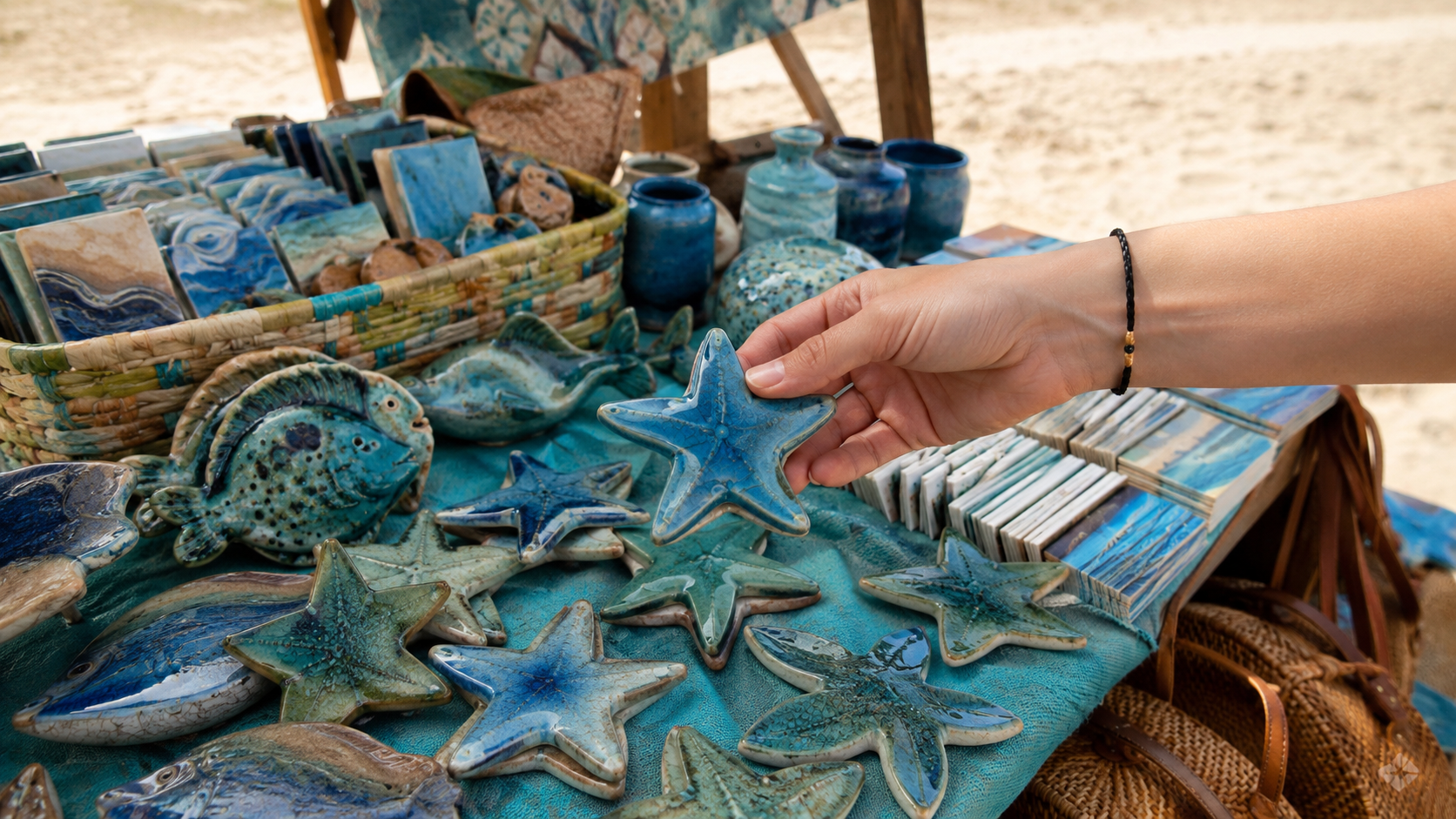
A better memory does not need an animal
Travelers have many alternatives that carry the spirit of a place without creating uncertainty about wildlife. A locally made ceramic, textile, painting, photograph, postcard or piece of recycled art can support artisans while leaving marine animals and coastal habitats where they belong.
If someone is considering a wildlife-derived souvenir, responsible questions include: What species is it? Was it captive-produced or collected from the wild? Is commercial collection allowed here? Can it legally leave this country and enter mine? Does it require a CITES document or another permit?
If the seller cannot answer clearly or provide documentation when required, the safest decision is not to buy. Travelers can also check official wildlife and customs guidance before departure rather than trying to resolve the issue at an airport inspection desk.
A photograph can preserve the color and wonder of a sea star in its habitat far better than a dried body on a shelf. The most meaningful souvenir may be the one that keeps the memory—and leaves the ocean alive.
Sources
- U.S. Fish and Wildlife Service: Caribbean Traveler’s Guide—Buyer Beware
- World Wildlife Fund: Buyer beware—shopping smart to protect wildlife and plants
- U.S. Fish and Wildlife Service: CITES permitting and trade framework
- NOAA National Marine Sanctuary System: marine wildlife and habitat information
