
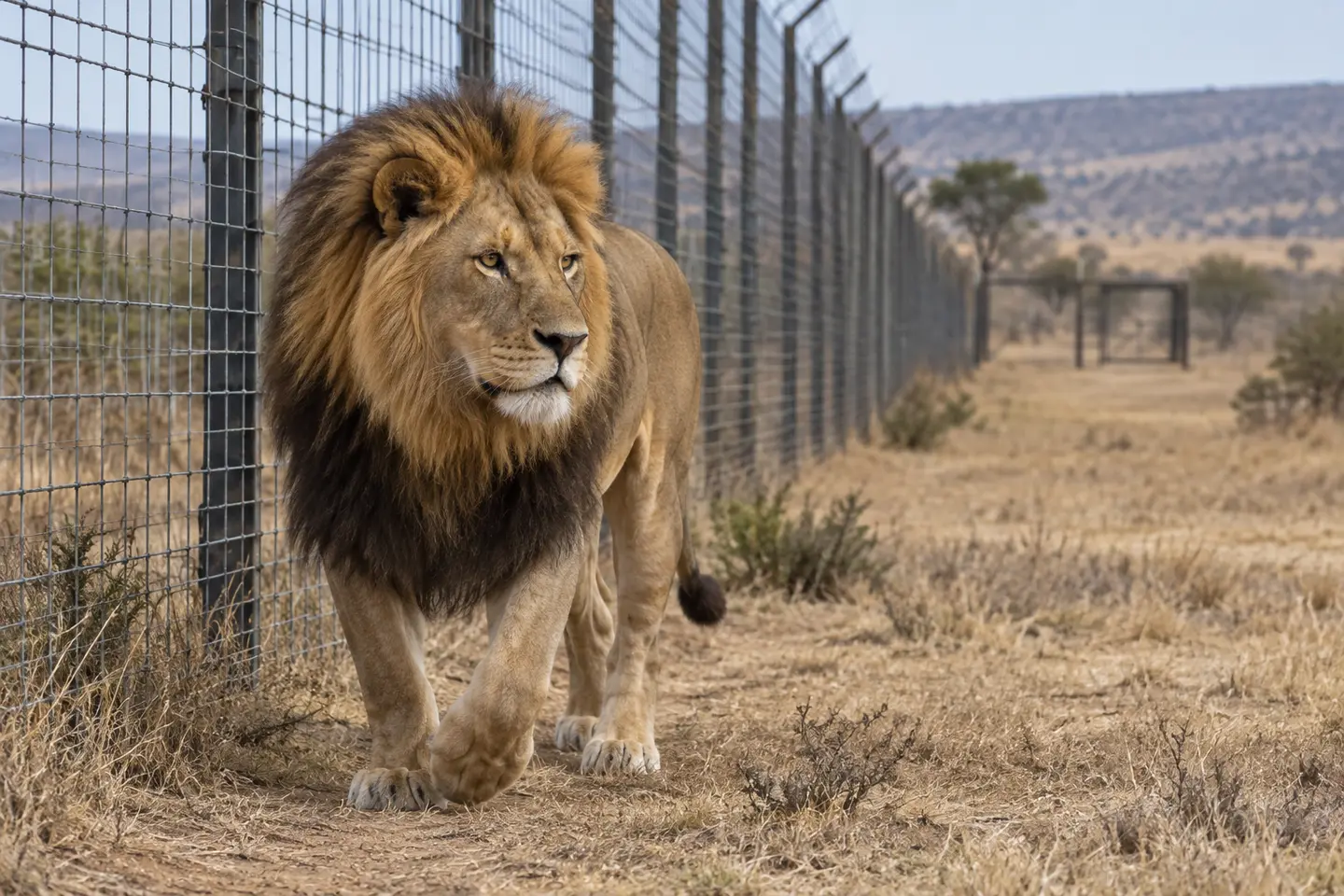
A fenced enclosure can turn a hunt into a near-guaranteed kill for a paying customer. That is the central ethical objection to “canned hunting,” a label commonly applied when captive or confined animals are hunted in conditions that severely restrict their chance to escape.
The term covers different practices in different jurisdictions, so it should not be confused with every form of regulated hunting or every fenced reserve. The defining concern is that confinement, captive breeding, habituation to people or a deliberately controlled setting removes meaningful pursuit and gives the animal little realistic chance of survival.
Why canned hunting is different
In an ordinary wildlife hunt, rules may govern seasons, quotas, methods and eligible areas. Canned or captive hunting adds another element: the animal’s movement has been constrained for the purpose of making a kill easier or more predictable. Animals may be bred commercially, moved between facilities or accustomed to human contact before being offered as trophies.
Animal-welfare organizations argue that such conditions convert a living animal into a product with a price attached. Born Free USA describes canned hunting as killing wildlife in a confined area from which the animal cannot escape. The Animal Legal Defense Fund has similarly documented captive hunting ranches in the United States and campaigns for prohibitions.
Even within the hunting community, “fair chase” is an important ethical idea. A guaranteed or heavily engineered outcome conflicts with the principle that a wild animal should have a reasonable opportunity to evade the hunter.
The law is not the same everywhere
There is no single worldwide rule. In the United States, regulation is divided among federal and state authorities, and state laws vary. Rhode Island enacted a 2024 prohibition on captive hunting operations that use barriers to prevent animals from escaping, while allowing specified exceptions such as licensed shooting preserves for domestic game birds.
South Africa has become the most prominent focus of the debate because of its commercial captive-lion industry. In 2024, the South African government announced recommendations that included ending captive lion breeding in the medium term and supporting a voluntary exit process. That policy direction should not be reported as proof that the entire industry has already disappeared; implementation and enforcement remain central questions.
These distinctions matter. Calling every trophy hunt “canned” can obscure the specific welfare problem, just as calling a captive kill “conservation” does not automatically prove a measurable benefit to wildlife.
Jobs and conservation deserve evidence
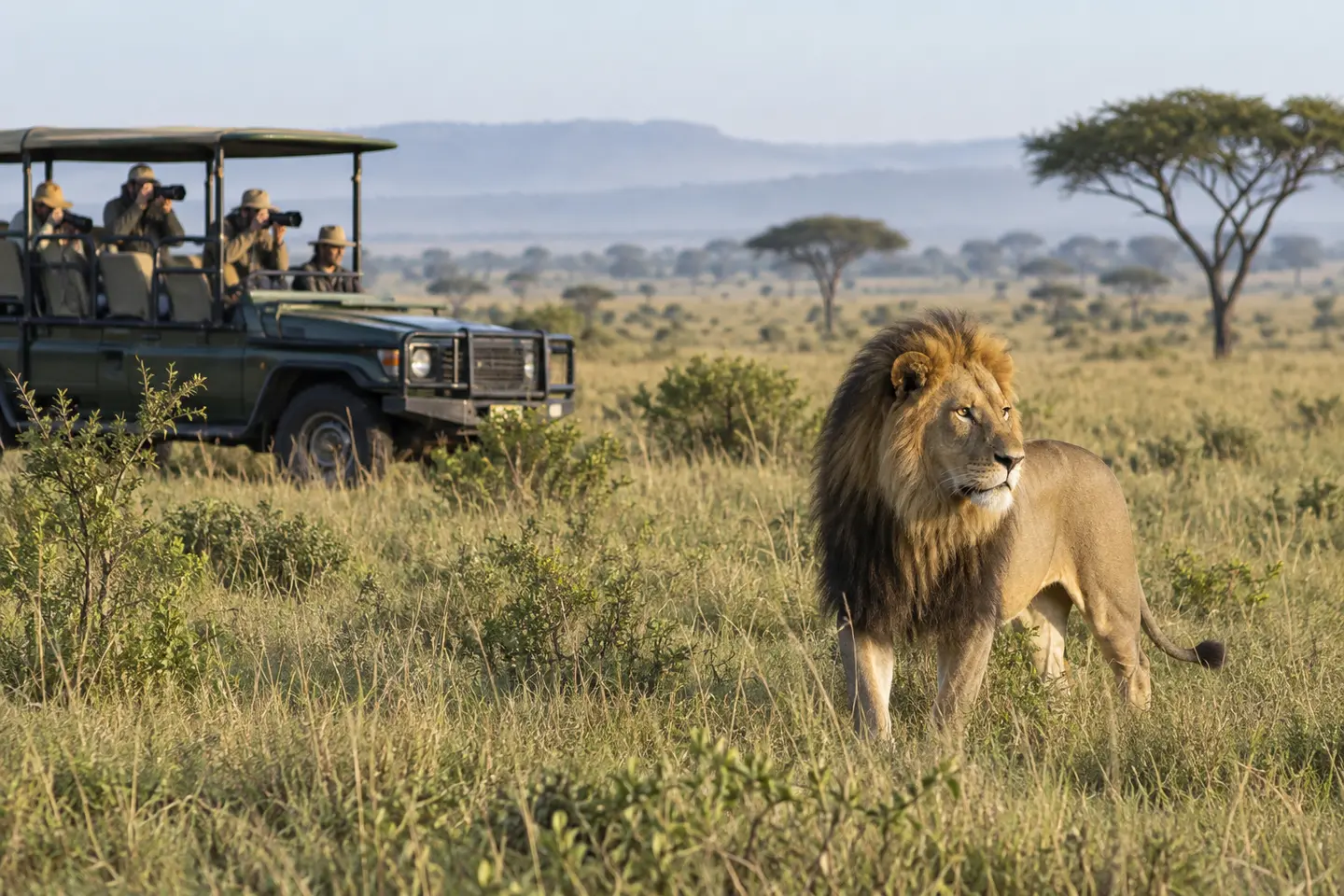
Operators and supporters often argue that hunting revenue pays landowners, creates jobs and helps retain wildlife habitat. Those questions cannot be dismissed, especially where rural communities have limited economic options. But conservation claims need transparent evidence: how much money reaches local residents, what habitat is protected, how animal populations are affected and whether welfare standards are independently enforced.
The International Union for Conservation of Nature recognizes that sustainable wildlife use can sometimes support conservation and livelihoods, but benefits depend on sound governance, biological sustainability and equitable distribution. That is not a blanket endorsement of captive or canned hunting.
Alternatives such as wildlife photography, guided viewing, habitat restoration and community-owned tourism can also create employment. They will not work equally well in every landscape, but they show that income from wildlife does not always require the animal to die.
The debate is therefore larger than whether a business is legal or profitable. It asks whether deliberately limiting an animal’s escape so a customer can buy a predictable kill is an acceptable form of recreation—and whether economic goals can be met through systems that keep wildlife alive.
Sources
- South African Government News Agency — captive lion industry recommendations
- Born Free USA — canned hunting overview
- Animal Legal Defense Fund — captive hunting overview
- IUCN — sustainable use and wildlife conservation
