
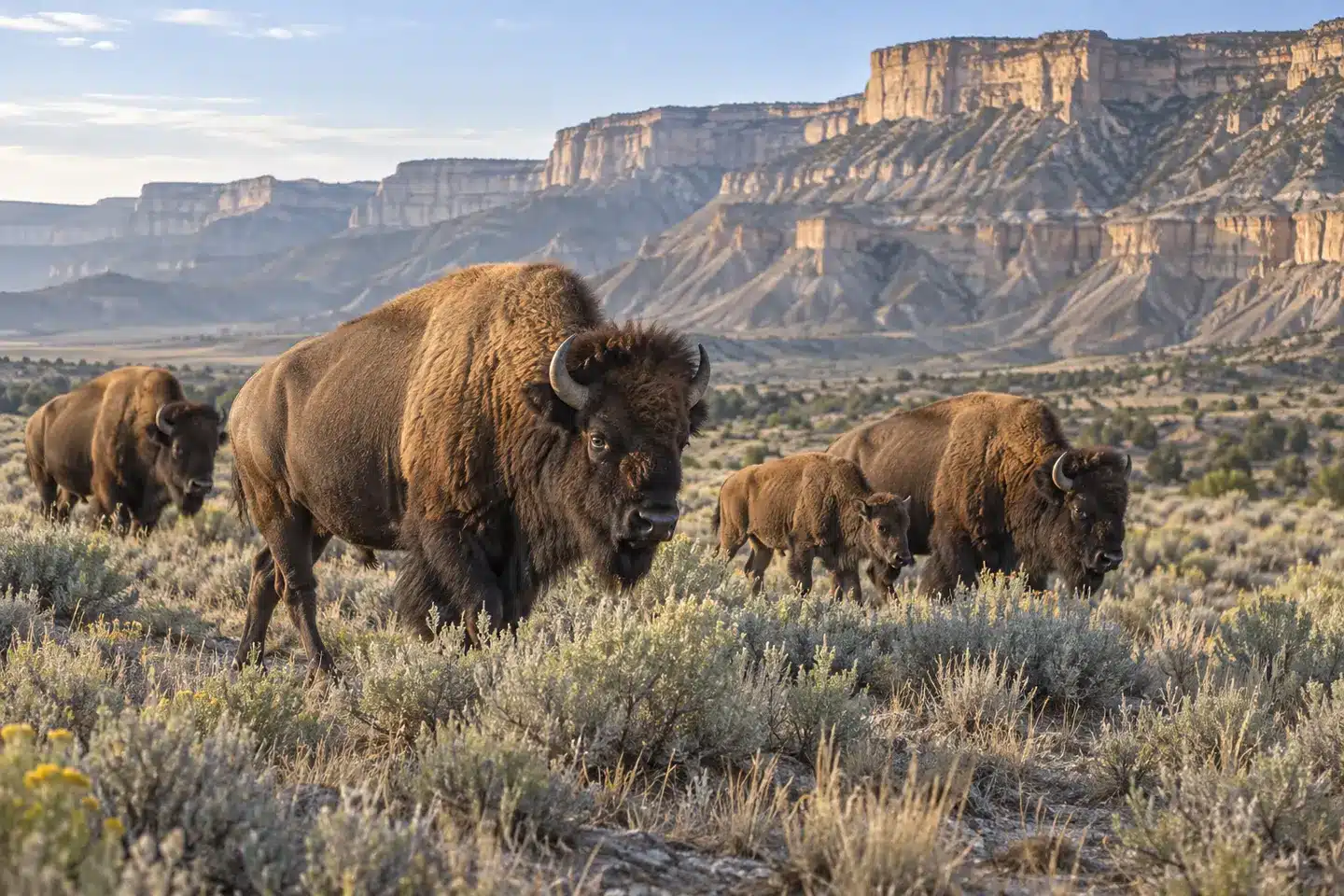
Free-roaming bison that cross into Colorado now have a legal status they lacked for generations. Under Senate Bill 25-053, wild bison are classified as big-game wildlife unless they meet the law’s definition of livestock, bringing animals that naturally enter the state under Colorado Parks and Wildlife management.
Governor Jared Polis signed the Protect Wild Bison measure on May 22, 2025, and the law took effect on January 1, 2026. The change matters most for animals from Utah’s Book Cliffs herd, which sometimes range into western Colorado.
What the law actually changes
Colorado’s previous legal framework generally treated bison as domestic animals. That left free-ranging animals in an awkward gap when they crossed the state line: they were not privately owned livestock, but they did not receive the protections that apply to wildlife.
The Colorado General Assembly’s enacted bill summary says wild bison are now big game. Hunting or taking one is illegal unless authorized by a rule of the Parks and Wildlife Commission. Privately owned bison remain livestock, as do animals that escaped lawful captivity. The law also preserves a separate status for bison owned by, or lawfully held by, an Indian tribe.
That distinction corrects the viral shorthand that Colorado simply made it illegal to kill any bison without exception. The protection is real, but it is a regulated wildlife-management system—not an absolute prohibition.
No regular bison season is planned
Colorado Parks and Wildlife says it is not proposing a regular bison hunting season. The agency may, however, issue special management licenses case by case for specific needs, including preventing agricultural or property damage.
For 2026, CPW created a roster from which hunters could be randomly selected if such a management action became necessary. A place on the roster was not a hunting permit, and a license would only be issued in response to an identified need. This limited mechanism gives wildlife managers flexibility without turning the returning herd into a routine game opportunity.
A management plan is still being developed
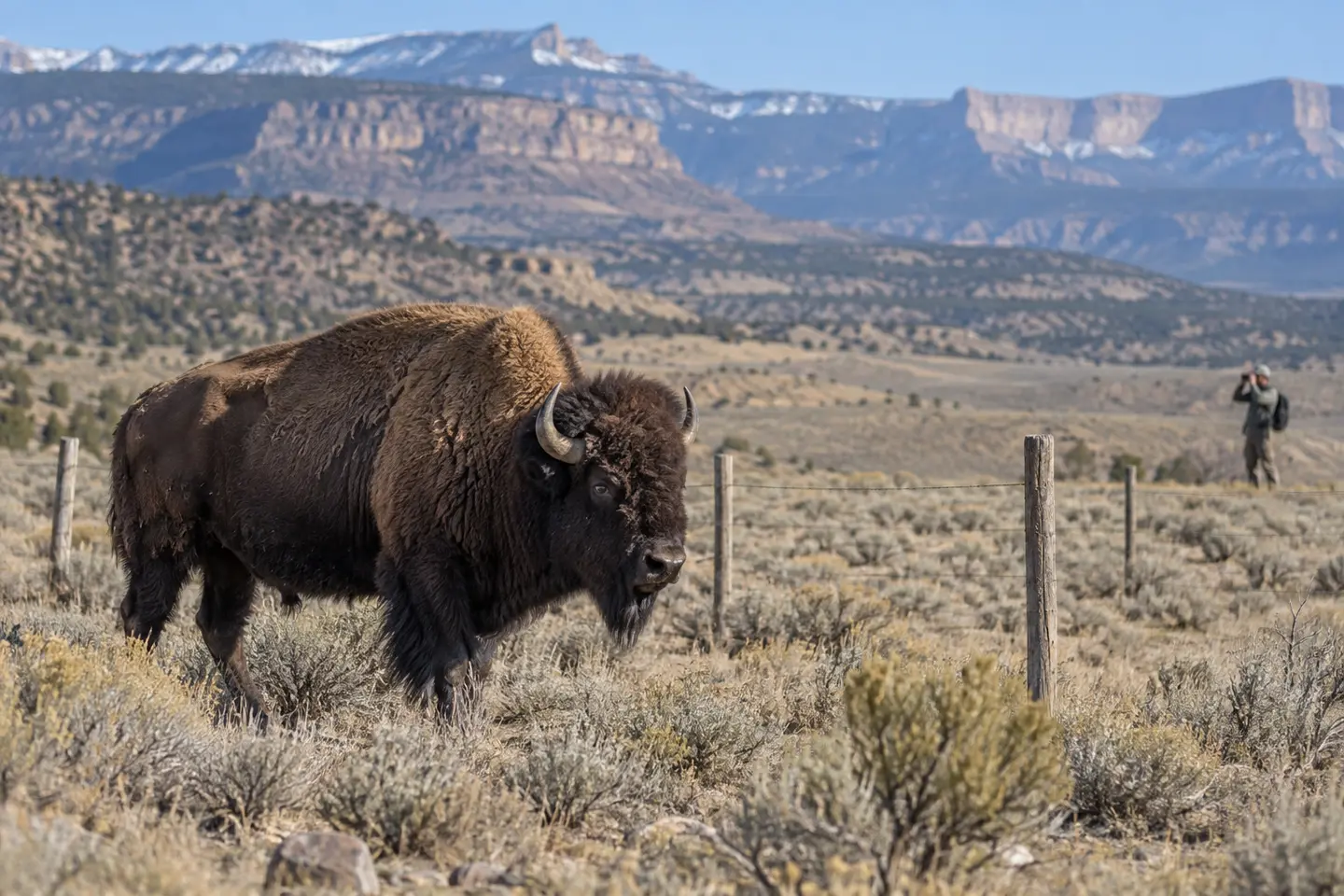
CPW says it is developing a Book Cliffs bison herd management plan. The process is expected to address population objectives, habitat and water, competition with other animals, damage prevention, and how to respond when bison move outside a designated management area.
The agency’s species guidance notes that Colorado’s last historic native bison were killed in South Park in 1897. Today’s movement from neighboring Utah therefore carries ecological and cultural significance beyond the small number of animals involved. The law also emerged through Colorado’s American Indian Affairs Interim Study Committee, recognizing the importance of bison to Tribal communities.
SB25-053 does not by itself restore a large resident herd, promise permanent sanctuary, or eliminate every possible management kill. What it does is replace an unprotected legal gray area with public oversight, enforceable penalties and a framework for long-term planning. For wild bison crossing back into Colorado, that is a meaningful change.
Sources
- Colorado General Assembly — SB25-053 Protect Wild Bison
- Colorado Parks and Wildlife — Bison species information
- Colorado Parks and Wildlife — Bison management and licenses
