
When a major winter storm approaches, communities issue warnings, open warming centers and urge residents to stay indoors. Yet dogs and cats living outside may have no reliable way to escape snow, freezing rain or dangerously low temperatures.
That raises a practical question for local leaders: should emergency weather plans include temporary refuge and coordinated support for homeless and community animals?
Cold weather can become deadly
The danger is not simply discomfort. The American Veterinary Medical Association warns that pets face cold-weather risks including hypothermia and frostbite. Animals with short coats, very young or old animals, and those with health conditions may be especially vulnerable.
The ASPCA advises keeping companion animals indoors during severe cold, noting that animals left outside can freeze, become disoriented, get lost, suffer injuries or die.
Homeless animals do not have an owner who can simply bring them inside. Some may hide beneath porches, inside abandoned structures or near parked vehicles. Others remain exposed while searching for food, drinkable water and a dry place to rest.
Not every outdoor animal can be safely caught or housed in the same way. Community cats, for example, may be unsocialized and highly stressed by confinement. Any local response should therefore combine professional sheltering with appropriate outdoor support rather than relying on one solution for every animal.
Emergency protection can take several forms
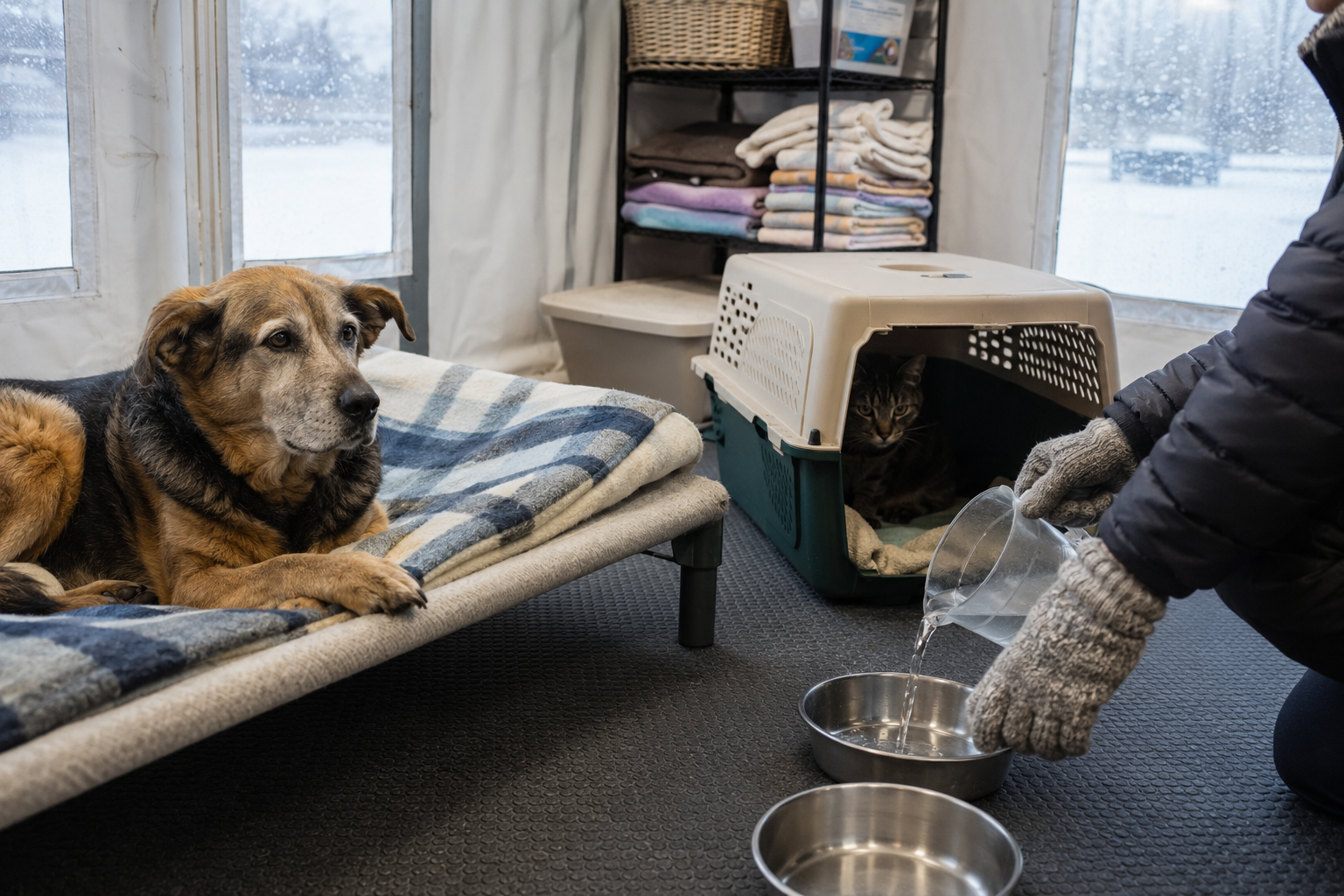
A community plan does not necessarily require building a permanent facility. During severe weather, local governments could coordinate with animal shelters, veterinarians, rescue groups and trained volunteers to identify temporary warming space, arrange transportation and publish one clear number for residents who find an animal in danger.
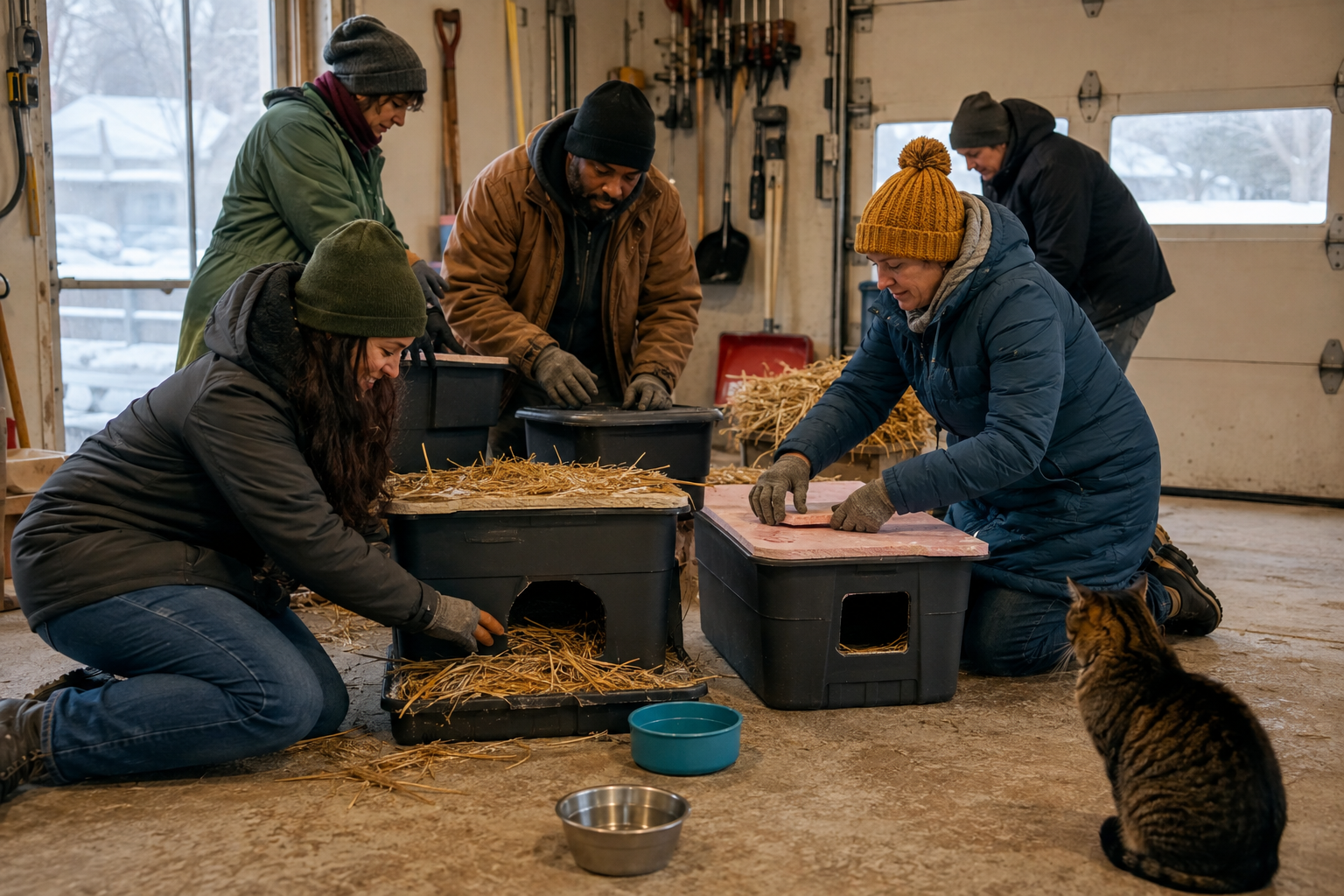
For community cats that remain outdoors, small insulated shelters can provide meaningful protection. Humane World for Animals recommends warm, dry, well-insulated shelters. Alley Cat Allies advises elevating shelters, facing entrances away from the wind and using straw rather than towels or blankets, which can absorb moisture and become cold.
Emergency plans could also include supplies such as straw, pet-safe bowls, crates, food and unfrozen water. Public guidance should explain when to call animal control, a shelter or law enforcement instead of attempting a risky rescue without help.
Compassion works best when it is planned
Individual acts still matter. A person can report an animal in distress, support a local rescue, donate appropriate supplies or help maintain a safe community-cat shelter. But volunteers should not have to invent an emergency response after the storm has already begun.
Planning ahead allows communities to decide who will answer calls, where animals can go, how different species will be separated and how temporary care will be funded. It also helps prevent well-intentioned actions from overwhelming shelters that are already near capacity.
No single program will solve animal homelessness. But severe weather is predictable, and the risks are well documented. Including animals in winter emergency planning is a concrete way for communities to turn compassion into protection when it matters most.
Sources
- American Veterinary Medical Association: Cold weather animal safety
- ASPCA: Cold Weather Safety Tips
- Humane World for Animals: How to care for outdoor cats in winter
- Alley Cat Allies: Cold Weather Tips for Cats
