
A bipartisan bill introduced in the U.S. House would sharply restrict the use of Department of Health and Human Services funding for biomedical research involving live dogs and cats. The proposal, known as the Companion Animal Protection Against Cruel Testing Act, or COMPACT Act, is a bill—not yet federal law.
H.R. 10522 was introduced on September 21, 2026, by Republican Rep. Nick Langworthy of New York with Democratic Rep. Mark Pocan of Wisconsin and other cosponsors. It was referred to the House Committee on Energy and Commerce.
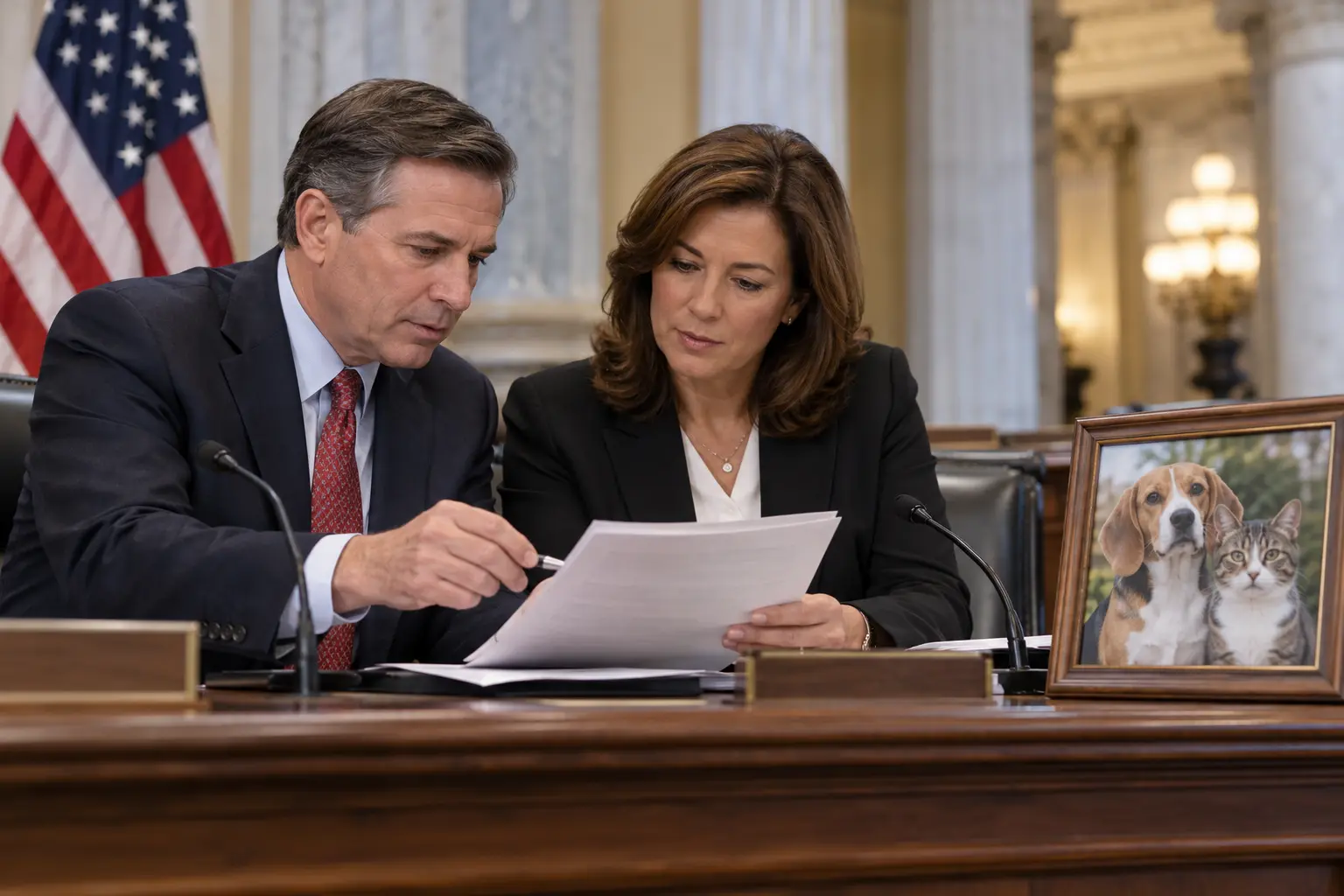
What the COMPACT Act would do
The official bill text would prohibit the obligation or expenditure of HHS funds for specified biomedical research activities involving live dogs or cats. Covered agencies include NIH, FDA, CDC and other HHS entities that award or administer biomedical research funding.
The proposal identifies activities such as breeding or acquiring dogs and cats for covered research, conducting invasive procedures, and administering experimental drugs, devices, infectious agents, toxins, radiation or other interventions. It also includes accountability provisions and annual reporting to Congress.
The bill is not written as an absolute ban on every interaction between veterinary medicine and research. Its definitions and exceptions preserve routine veterinary care, noninterventional observation and certain clinical research involving client-owned animals. It also allows flexibility for a declared national emergency under specified conditions.
A path to retirement and adoption
For dogs and cats no longer needed for biomedical research, funded institutions would be required to make reasonable efforts to retire, adopt or transfer them to accredited sanctuaries, rescue organisations, adoption programs or other appropriate placements. Decisions would still need to reflect veterinary judgment, animal health, public safety and applicable law.
Euthanasia would be limited to cases in which a licensed veterinarian determines it is necessary because of a medical or behavioural condition, or another compelling animal-welfare or public-safety consideration.
Part of a broader shift in federal research
The bill arrived as federal health agencies were expanding work on research methods intended to better reflect human biology while reducing unnecessary animal use. On the same date the legislation was introduced, HHS announced department-wide actions to advance human-based research and scientifically validated alternatives.

Those approaches include organoids, organ-on-chip systems, human cell models and computer-based methods. HHS says the aim is to develop and validate tools that can improve human relevance while giving researchers and regulators more options. The FDA began implementing a roadmap in 2025 that encourages suitable new approach methodologies in drug development, while NIH has launched new funding and infrastructure programs in this area.
The legislative push and the agency initiatives are related in direction but legally distinct. HHS policy can guide programs and funding priorities; the COMPACT Act would establish statutory limits if it passes both chambers of Congress and is signed into law.
What happens next
The bill’s sponsors announced the proposal on September 23, calling it a way to modernise federally funded biomedical research and protect companion animals. Supporters include animal-welfare organisations, but introduction is only the first stage of the congressional process.
For the proposal to become law, it would need to advance through committee, pass the House and Senate, and receive the president’s signature. Until then, its immediate significance is that a bipartisan group of lawmakers has placed federal funding for experiments on dogs and cats directly before Congress.
Separately, HHS says its agencies are accelerating human-based research methods and reducing reliance on animal testing where scientifically appropriate.
